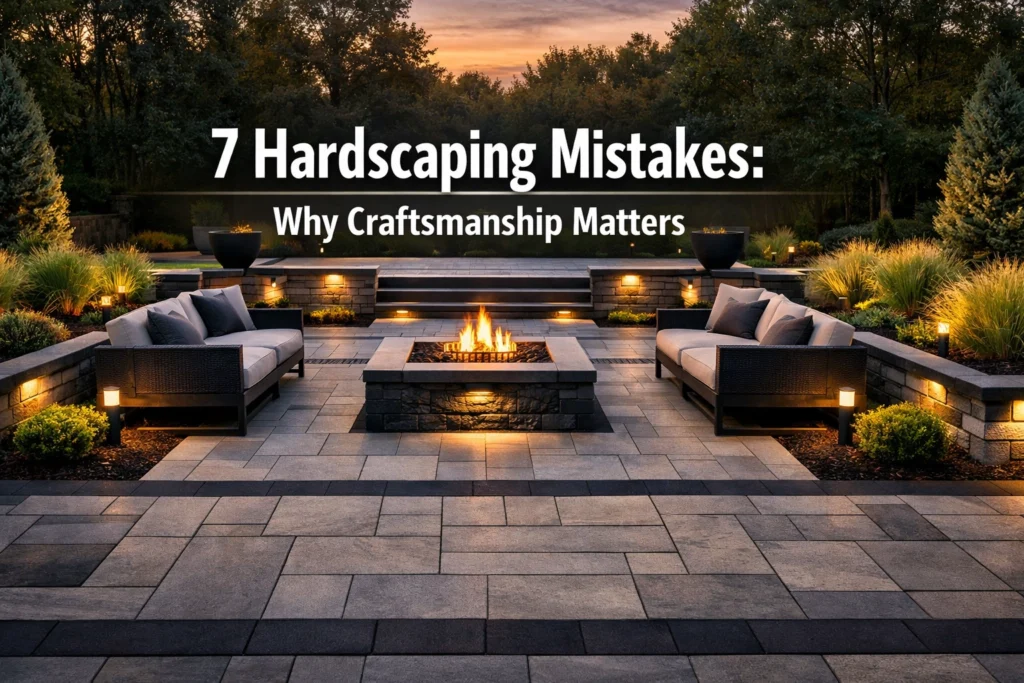
On day one, almost every hardscape looks good—fresh pavers, clean lines, no weeds, no settling. But the real test of craftsmanship usually shows up around the 5-year mark, after Maryland’s freeze-thaw cycles, heavy rain, and normal everyday use.
That’s where shortcuts taken during installation (the stuff most homeowners can’t see) start to show themselves:
- Pavers that feel uneven underfoot
- Joints that open up and grow weeds
- Edges that drift and lose that crisp, “new build” look
- Water that starts going where it shouldn’t
This guide is written for Harford County homeowners who want to know what to look for—so you can recognize quality work, ask better questions, and invest in a patio that still looks sharp years from now.
The 5-Year Test: What to Look For (The 7 Most Common Mis takes)
1) The Base Foundation: Open Grade vs. “Cheaper” Dense Grade If there’s one thing that determines whether your patio ages well, it’s the base.
In Harford County, we deal with clay-heavy soil, big rain events, and freeze-thaw. A base that traps water or softens over time can lead to settling and that “tired” look.
What to look for:
- A contractor who explains base depth, lift thickness, and compaction (not “we always do it this way”)
- A plan for water movement through the system—not just on top of it
- Materials that are chosen for performance, not just price
At PTG Landscape, we use open-graded aggregate (instead of dense-graded) because it helps wa ter move through the base rather than getting trapped—one of the most important steps for long term stability in Maryland’s climate.
2) Precision Edging & Cutting: The Details That Hold Everything Together Edges and cuts aren’t just about looks—they’re about keeping the whole system tight.
If edging is weak, inconsistent, or skipped in spots, pavers can slowly drift. If cuts are sloppy, the perimeter will look worse every year (even if it “hides” at first).
What to look for:
- Tight, clean cuts along curves, borders, and structures
- Crisp lines that stay consistent (no random slivers or wide gaps)
- Solid edge restraint and a clear plan for locking the perimeter in place
A premium patio is all about the little details being handled like they actually matter—because they do.
3) The Finish: The Rolling Vibratory Compactor (Dead-Level That Stays Dead Level)
A patio can look flat and still be built in a way that settles unevenly.
One of the most overlooked steps in achieving (and keeping) a dead-level surface is the final com paction process.
What to look for:
- A contractor who uses a rolling vibratory compactor as part of the finishing process • A consistent, methodical final pass—not a quick “tap it down and go” approach • Tight joints and a surface that feels locked in underfoot
This is one of those pro-level steps that helps a patio stay crisp through seasons—not just through the final walkthrough.
4) Drainage Integration: The “Hidden Work” That Matters More Than the Pavers
Drainage is the silent project-killer because you often don’t notice it right away.
If water isn’t intentionally managed—surface pitch, collection points, discharge paths—it can under mine the base, wash out joint material, and create settlement issues that show up later.
What to look for:
- A clear slope plan (where does water go during a heavy rain?)
- Proper grading at transitions: house to patio, patio to lawn, steps, walkways • Drainage solutions when needed (not as an afterthought)
If someone can’t explain the water plan confidently, that’s a red flag—because water always wins.
5) Polymeric Sand Execution: It’s Not the Sand—It’s the Prep Polymeric sand is a great tool—when it’s installed correctly.
The mistake we see is treating it like a “pour and sweep” step. If the joints aren’t properly filled, com pacted, and set, you can get early joint loss, weeds, and shifting later on.
What to look for:
- Full joints (not half-filled)
- Proper compaction before final set
- A clean surface with no haze and no rushed finishing
Done right, joints stay tight and clean-looking. Done wrong, they’re the first thing that makes a patio look older than it should.
6) Design for Reality (Furniture Flow): Usability Is Part of Quality A patio can be built perfectly and still be a disappointment if the layout doesn’t match how you live.
Furniture flow isn’t a “nice-to-have.” It determines whether your outdoor space is comfortable, func tional, and enjoyable long-term.
What to look for:
- Enough clearance behind chairs and around dining areas
- Logical paths from door → seating → grill → steps
- A layout that’s designed for your real furniture and real routines
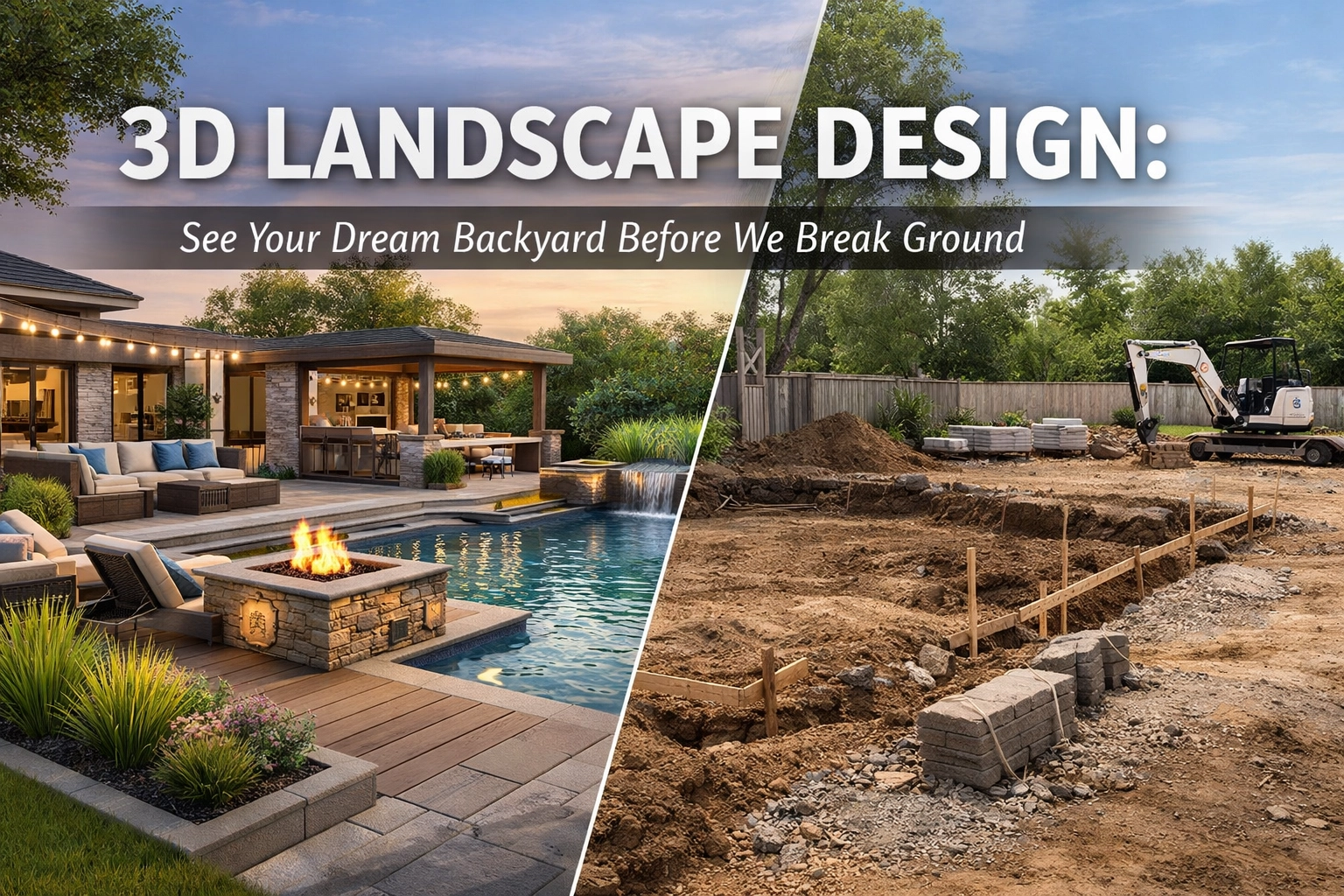
This is where PTG Landscape often uses 3D landscape design to help homeowners see the space before it’s built—so it works on day one and year five.
7) Lighting & Softscaping: A Project Isn’t Finished Until It’s “Clothed” Hardscape is the structure. Landscaping and lighting are what make it feel complete.
Without “softscaping,” a patio can feel harsh once the initial excitement fades. Without lighting, you lose nighttime usability and the space feels flat after dark.
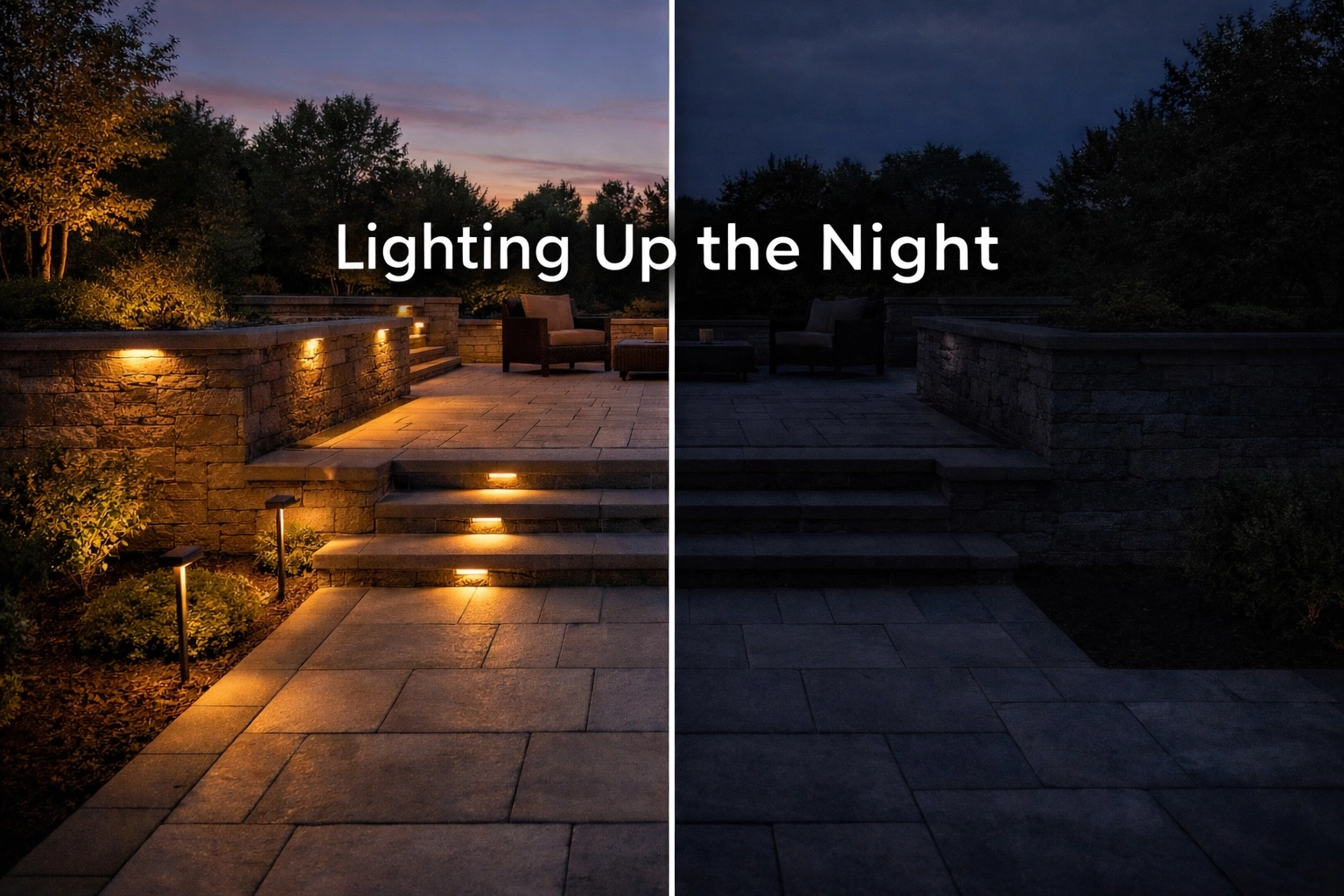
And here’s a practical cost note for homeowners: it’s tempting to “add lighting later,” but it’s signifi cantly more expensive once the hardscaping is finished. Retrofitting often means lifting pavers, pulling material back, or even drilling through finished masonry to run wiring—extra labor that adds up fast. When lighting is installed during the initial build, the wiring and fixtures are integrated seamlessly, the finish is cleaner, and you typically save money long-term.
What to look for:
- A planting plan that softens edges, adds privacy, and creates seasonal interest • Lighting that’s integrated (not slapped on later) for safety and atmosphere • A cohesive finish where the hardscape blends into the yard, not just sits on it
The best outdoor spaces feel like an extension of the home—because all the layers were planned to gether.
Conclusion: Build a Patio That Still Turns Heads in 5–10 Years If you’re investing in a patio in Harford County, don’t judge it by the day-one photo.
Judge it by how well it’s built to handle real life: rain, freeze-thaw, foot traffic, furniture, and time.
PTG Landscape builds outdoor living spaces with the technical standards and precision craftsman ship that keep them looking clean, level, and “new” for the long haul.
When you’re ready to plan a space that looks just as good in 5–10 years as it does today, take a look at what we build: check out our gallery.